
Getting Hale County Court Records
The Circuit Clerk of Hale County keeps Circuit and District Court records, including the divisions listed on the official Hale County court information hub. Start with Just One Look for paid remote case details, or use the read-only Alacourt subscriber service when applicable. Remote access does not replace the clerk. Open records may be inspected at the courthouse, questions may be handled by phone, and a written copy request may be mailed after staff confirms the terms.
- Identify the Circuit or District division, case number, style, and filing year.
- Inspect the case detail online or view the open record at the clerk's counter.
- Write down the exact document title and docket-entry date.
- Ask for a plain or certified copy and confirm page count, price, postage, and payment method.
- Submit the request in person or mail it only after the clerk confirms the current instructions.
Call 334-624-4257 or check the official Hale County court landing page for division routing, older-record status, current copy charges, and mailing instructions. No Hale County-specific email, fax, or online copy-request form was located. Alabama Code §36-12-40 and court rules support inspection and copies, but a generic executive-agency request portal does not supersede judicial custody.
Hale County Court Record Custodian
The Circuit Clerk is the official record keeper and business manager for Hale County Circuit and District Courts. The office maintains pleadings, images court records, prepares subpoenas, issues trial and hearing notices, and handles court money. Alabama's unified structure avoids a common error: researchers do not go to a separate “district clerk” for one trial level and a “county clerk” for another. The same Hale County office routes both Circuit and District record requests.
Hale County Circuit Clerk
Hale County Courthouse
1001 Main St., Greensboro, AL 36744
334-624-4257
Monday-Friday, 8:00 a.m.-4:30 p.m.
Municipal court clerks keep city ordinance and municipal traffic records unless a matter is appealed. The Hale County Probate Judge separately keeps probate records. The document itself should identify the proper court and custodian.
Court Record Types
Several products can arise from one Hale County case. The docket or case action summary is the time-ordered index. Filed documents supply the content behind listed events. A certified copy carries the clerk's authentication and is distinct from a downloaded image or screen print. The proper product depends on why the record is needed, and the clerk can confirm whether the requested item is public and available.
- Case action summaries showing filings, settings, rulings, and outcomes
- Pleadings such as complaints, petitions, answers, and motions
- Signed orders, judgments, dispositions, and sentencing material
- Public attachments and exhibits kept in the court file
- Certified copies issued from records held by the clerk
A transcript is not just another clerk copy. The court reporter creates the word-for-word record of a proceeding and produces a transcript on request. Identify the judge, date, proceeding, and case number through the clerk, then obtain the current quote from the assigned reporter.
Hale County Record Certification Ladder
A remote case detail can help locate a Hale County record. It does not by itself supply an official copy. The useful sequence is docket entry → filed document → certified copy. First find the exact event. Next inspect or order the pleading, order, or judgment behind it. Finally, ask for certification when another court or agency requires proof authenticated by the clerk.
Certification check: A screenshot shows what appeared on a service at one time; only the custodian can certify the court record.
Specify the exact title and filing date. “The judgment” can be unclear if the docket contains an amended judgment, later order, or several parties. Also give the court division and case number. The more exact request lets staff identify the correct Hale County court record and calculate the charge without guessing.
Inside a Hale County Court Record
The docket begins with a header and then records actions over time. A full Hale County court file may include pleadings and signed rulings that are only named in that list. Exact fields depend on the case type and access rules. The status “disposed” means the system treats the matter as concluded at that level, not that a particular party won or that a criminal charge resulted in conviction. Read the judgment or disposition document for the actual outcome.
| Case header | Court, case number, style, type, filing date, status, and judge. |
|---|---|
| Pleadings | Complaints, petitions, answers, motions, and other filed papers. |
| Orders and judgments | Signed rulings, final decisions, and later amended or post-judgment orders. |
| Case action summary | Chronological entries for filings, settings, notices, rulings, and disposition. |
| Public attachments | Images or exhibits where filed, imaged, and legally open. |
Parties, counsel, charge or claim data, financial assessments, and related-case references may also appear. Protected identifiers are redacted, and confidential or sealed content remains unavailable without authority.
Hale County Electronic Court Records
Hale County confirms that court records are electronically imaged. That supports current case administration and public access, but it does not mean every historical item is searchable online. The courthouse dates to 1908. Under Rule 31, an accurately scanned or microfilmed original may be disposed of after preservation checks, while scheduled historical records may go to the Alabama Department of Archives and History.
For an older Hale County court record, provide names, approximate year, case type, and party roles. Ask the clerk to check electronic, paper, microfilm, and archival paths. The official record may survive even when a remote name query does not find it. No Hale source states that the 1935 courthouse fire destroyed records, so that conclusion should never be assumed.
Fees and Certified Copies
Rule 30 of the Alabama Rules of Judicial Administration governs ordinary copies, certifications, costs, and record searches. It lets the clerk require a written request and payment before release. Hale County has not posted a complete local trial-record tariff or certified-copy form. The published Hale County cost sheet identifies a $0.25-per-page clerk-retained component for printed copies under 20 pages, but the total current charge should be confirmed before ordering.
| Item | Amount |
|---|---|
| Printed copy under 20 pages | $0.25 per page clerk-retained component; confirm total |
| Plain copy of 20 pages or more | Not published locally; ask the clerk |
| Certification or exemplification | Not published locally; confirm per document or case |
| Record search | Current amount not published; Rule 30 controls |
Rule 401 permits free viewing of open electronic Circuit and District records at the clerk's office during business hours. The requester bears copy and postage costs. Do not mail cash or any payment until the office confirms what it accepts.
Hale County Remote Record Charges
Just One Look pricing is separate from the clerk's copy schedule. As inspected August 13, 2026, a name or case-number search costs $9.99 and includes one case detail. Each additional case costs $9.99. Document images cost $5 for the first 20 pages and $0.50 per added page. A report may include setting dates, actions, rulings, parties, the case action summary, financial information, images, and attachments.
Those charges buy remote access, not certification. An image may also be absent, not digitized, sealed, or outside product access. When only the docket entry appears, record its exact title and date, then contact the Circuit Clerk. A paywall never grants access to confidential material.
Hale County State and Federal Records
A Hale County state court record comes from the Circuit Clerk or Alabama trial-court system. Federal cases use different custodians. Hale County lies in the Northern, or Selma, Division of the U.S. District Court for the Southern District of Alabama. Federal civil and criminal dockets use CM/ECF and PACER, while bankruptcy records belong to the U.S. Bankruptcy Court for the Southern District of Alabama.
The Southern District's official site identifies the federal court route.
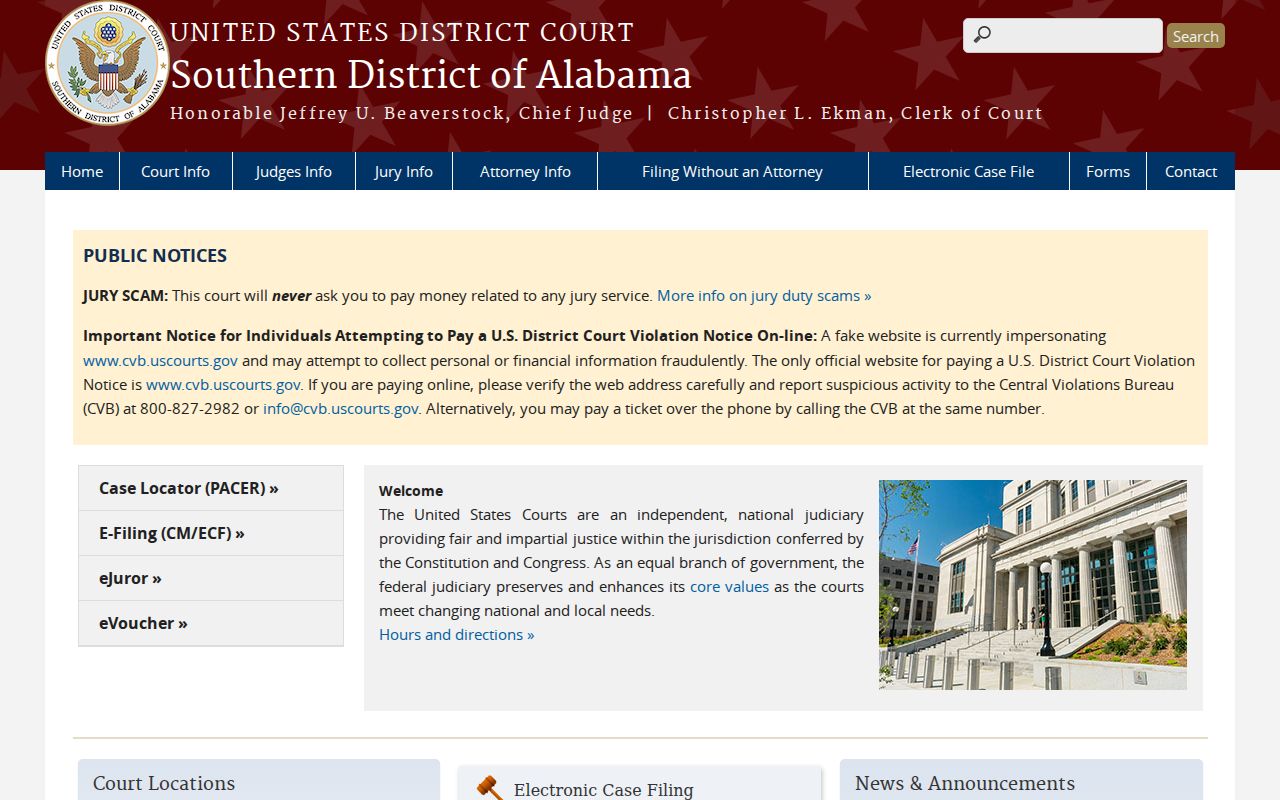
This federal source should be used only when the underlying case is federal, not as a substitute for Hale County Circuit or District records.
The Southern District Bankruptcy Court maintains a separate bankruptcy docket.
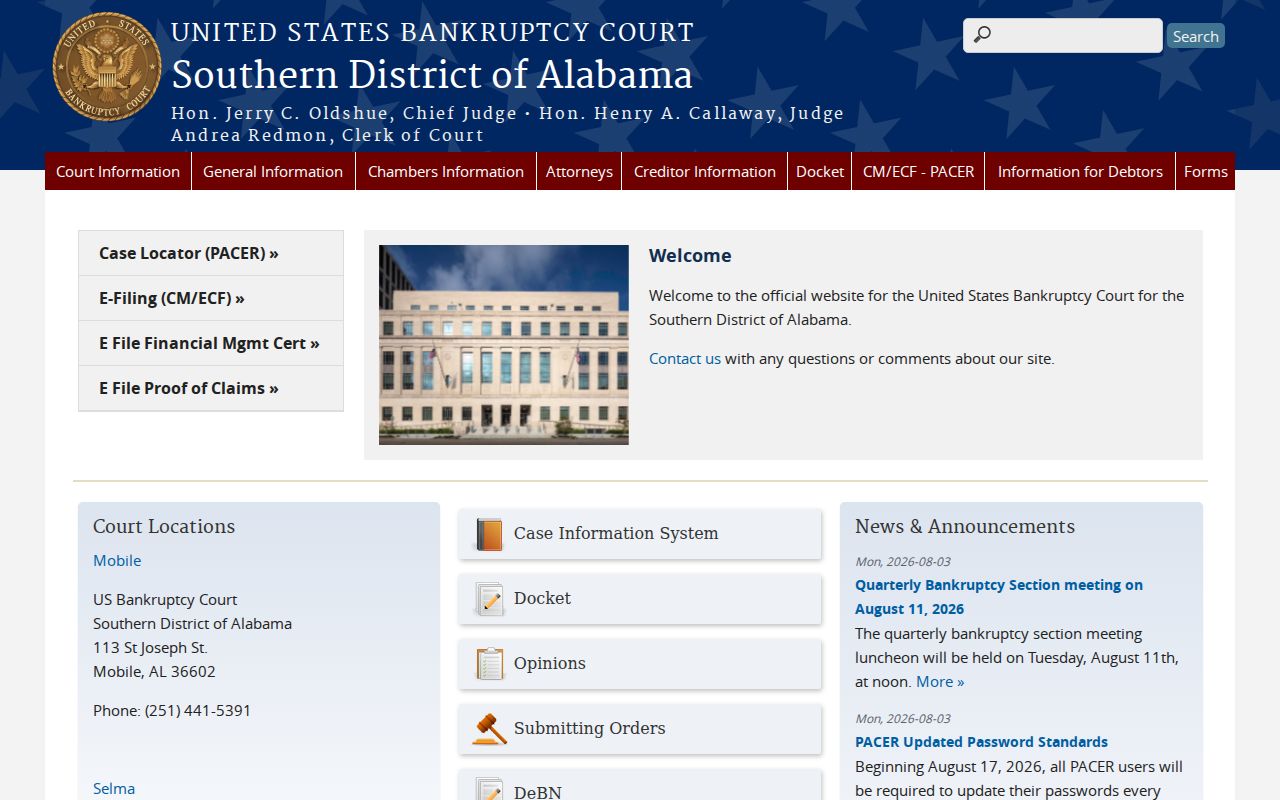
The court named on the first page of the filing is the simplest way to keep the state, federal, and bankruptcy systems apart.
Hale County Municipal Record Custody
Municipal court records do not become Hale County Circuit Clerk records merely because the city sits in Hale County. City ordinance and municipal traffic matters begin with the issuing municipal court. Moundville is especially important because the municipality crosses the Hale County and Tuscaloosa County line. The issuing authority and citation determine the custodian. An appeal can later create a Circuit Court docket.
The official Moundville Municipal Court page supplies its direct city court route.
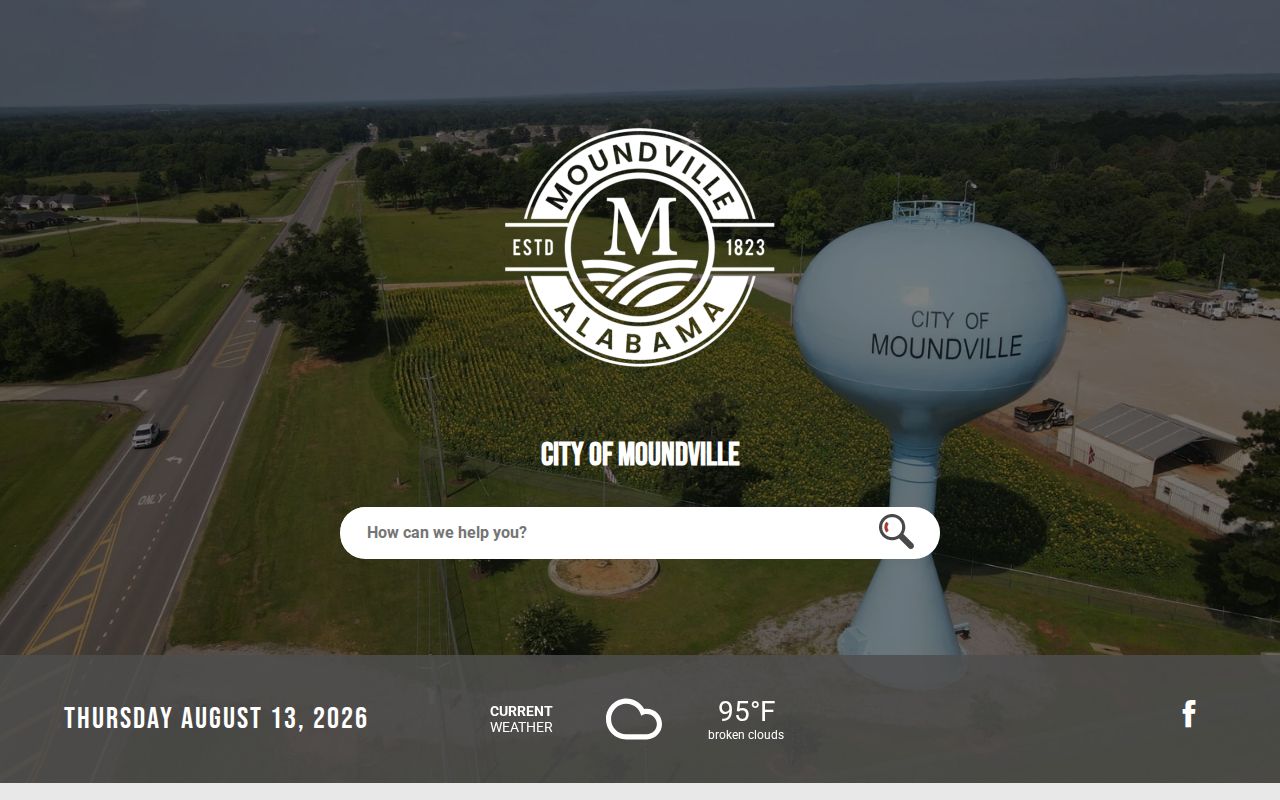
This municipal record source is distinct from the Hale County Circuit and District record system.
Sealed Records and Public Access
Open Hale County court records may be inspected remotely where authorized or at the clerk's office. Online visibility is not the test of legal access. A public paper record can be missing from the web, while sealed, juvenile, and protected content remains restricted through every channel. A person seeking restricted material must identify their legal role and supply any required order or identification.
Key Rules:
Alabama Code §36-12-40 supports inspection and copying of public writings.
Rule 33 preserves public inspection and paid printed copies at circuit clerks' offices.
Court-Record Privacy Rules define confidential categories, redaction duties, and sealing procedures.
Juvenile legal, social, and medical records are confidential under Alabama Code §12-15-133. Protected identifiers are redacted. Expunged and sealed files do not operate like ordinary disposed records, and payment does not change those limits.